

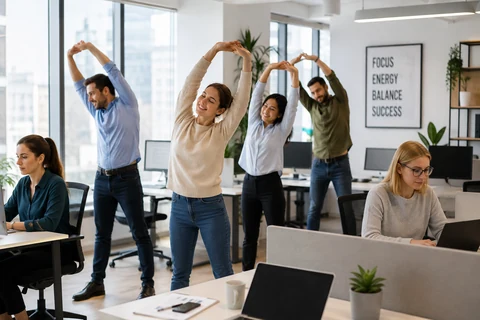
How to Reduce Workplace Stress Without Disrupting the Working Day
Short habits that fit into the day: exercise snacks, microbreaks, chair massage, walking meetings and better desks.
Read the article
Employee wellbeing has become a business priority rather than simply an HR initiative. The most successful wellbeing programmes focus on practical, sustainable improvements that reduce stress, improve engagement, support productivity, and help retain talented employees. This guide explores 15 employee wellbeing ideas that organisations of all sizes can implement in 2026.
The best employee wellbeing initiatives are those that employees actually use. Successful programmes combine supportive leadership, flexible working, mental wellbeing support, healthy workplace habits, and practical initiatives such as office massage that encourage employees to recharge during the working day.
A free lunch once a month or a table football in the break room is no longer enough to build a healthy workplace.
Today's employees expect organisations to genuinely care about their wellbeing—not just during stressful periods, but throughout the year.
For employers, investing in wellbeing is no longer simply about making employees happier. It can contribute to improved engagement, lower absenteeism, better retention, higher productivity, and a stronger employer brand.
The challenge is choosing initiatives that employees actually value.
This guide explores 15 practical employee wellbeing ideas that organisations can implement in 2026, regardless of company size.
Healthy employees are generally more engaged, more productive, and more likely to remain with their employer.
Effective wellbeing programmes can help organisations:
Wellbeing should not be viewed as a one-off event but as part of everyday leadership and workplace culture.
Key takeaway: The best wellbeing initiatives solve real workplace challenges rather than simply offering occasional perks.
Chair massage is one of the easiest wellbeing initiatives to introduce into an office environment.
Short sessions allow employees to relax, reduce muscle tension from desk work, and take a meaningful break without leaving the workplace.
It is particularly valuable during busy periods, project deadlines, or company wellbeing events.
Best for:
Many employees remain seated for hours without stepping away from their desks.
Encouraging short breaks throughout the day supports concentration and helps reduce mental fatigue.
Simple reminders or calendar prompts can make a significant difference.
Where operationally possible, flexible working allows employees greater control over when and where they work.
This often improves work-life balance while helping reduce unnecessary stress.
Managers have one of the greatest influences on employee wellbeing.
Training managers to recognise stress, provide feedback, and manage workloads effectively creates healthier teams.
Open conversations around mental wellbeing help reduce stigma and encourage employees to seek support when needed.
Workshops, awareness campaigns, and mental health resources all contribute to a healthier workplace.
Poor workstation setup contributes to neck pain, back pain, headaches, and physical discomfort.
Regular ergonomic assessments can improve employee comfort and reduce musculoskeletal issues.
Recognition remains one of the simplest and most effective wellbeing initiatives.
Employees who feel appreciated are often more engaged and motivated.
Recognition can include:
Not every meeting needs to happen in a conference room.
Walking meetings encourage movement, improve energy, and often lead to more creative discussions.
Healthy food options support energy levels throughout the working day.
Providing fruit, healthy snacks, and water stations encourages better daily habits.
Employees often experience greater wellbeing when they continue learning and growing.
Training, mentoring, conferences, and career development demonstrate long-term investment in employees.
Dedicated wellbeing days create opportunities for employees to recharge and strengthen relationships.
Activities may include:
These events work best when integrated into an ongoing wellbeing strategy.
Constant notifications contribute to mental fatigue.
Encourage employees to:
The best wellbeing programmes are shaped by employees rather than assumptions.
Regular surveys help organisations understand changing needs and identify new opportunities for improvement.
Culture influences wellbeing every day.
Healthy workplace cultures encourage:
Culture is created through everyday behaviours—not occasional wellbeing campaigns.
The most successful organisations do not treat wellbeing as a side project.
Instead, they include wellbeing in leadership discussions alongside performance, customer satisfaction, and business objectives.
This creates long-term commitment rather than isolated initiatives.
Key takeaway: Sustainable wellbeing programmes become part of how the organisation operates—not simply something HR organises once a year.
There is no single wellbeing initiative that works for every organisation.
The most successful employers combine practical support, healthy leadership, flexible working, recognition, and meaningful wellbeing activities that employees genuinely value.
Rather than asking, "Which wellbeing programme is the cheapest?", organisations should ask, "Which initiatives will make the biggest difference to our people?"
Small improvements implemented consistently often create the greatest long-term impact.
Employee wellbeing is not simply an HR trend—it is an investment in people, culture, and business performance.
Employee wellbeing refers to the physical, mental, emotional, and social health of employees in the workplace.
Supporting wellbeing can improve engagement, productivity, retention, workplace culture, and employee satisfaction while helping reduce stress and absenteeism.
Some of the most effective initiatives include workplace chair massage, flexible working, employee recognition, mental health support, ergonomic improvements, manager training, and regular wellbeing feedback.
Healthy, engaged employees are generally more focused, motivated, and productive than employees experiencing ongoing stress or burnout.
Rather than occasional events, wellbeing should be supported throughout the year with regular initiatives that become part of everyday workplace culture.
Many organisations include office massage within their wellbeing programmes because it encourages employees to take restorative breaks, reduces physical tension associated with desk work, and provides a visible demonstration of the employer's commitment to wellbeing.
Yes. Many wellbeing initiatives—such as regular recognition, flexible working, walking meetings, healthy snacks, and chair massage—can be introduced without large budgets.
Common measures include employee engagement surveys, absenteeism, staff turnover, participation rates, employee feedback, and productivity trends.
Short habits that fit into the day: exercise snacks, microbreaks, chair massage, walking meetings and better desks.
Read the article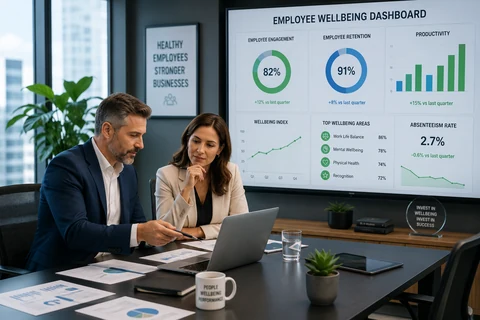
Why leaders now treat wellbeing as part of business strategy, and how to measure whether it works.
Read the articleTell us your team size and we’ll send a quote within one working day.
Get my quoteRead more: Team building massage. A team day activity everyone can join, fully clothed and with nothing to prepare.