

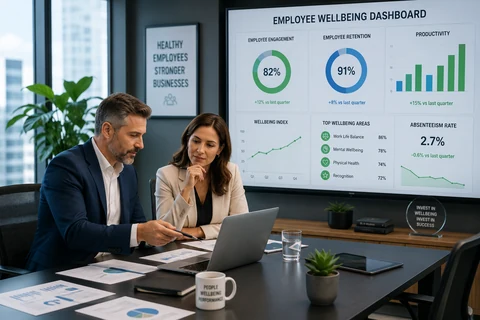
Why Workplace Wellbeing Is Becoming a Business Strategy—Not Just an HR Initiative
Why leaders now treat wellbeing as part of business strategy, and how to measure whether it works.
Read the article
Reducing workplace stress doesn't have to mean lengthy workshops or losing valuable working hours. Many of the most effective stress-reduction strategies take just a few minutes and fit naturally into the working day. Small, consistent wellbeing habits—such as movement breaks, exercise snacks, chair massage, walking meetings, and regular recovery breaks—can improve employee wellbeing while maintaining productivity.
The best way to reduce workplace stress without disrupting work is to introduce short, practical wellbeing habits that fit into employees' daily routines. Five-minute movement breaks, exercise snacks, workplace chair massage, walking meetings, ergonomic improvements, and supportive management can all reduce stress while helping employees remain focused and productive.
Many employers want to improve employee wellbeing but worry that such initiatives will reduce productivity.
It's a common misconception.
In reality, the opposite is often true.
Employees who remain under continuous pressure without opportunities to recover gradually become less productive, make more mistakes, and lose motivation.
The good news is that reducing workplace stress doesn't require half-day workshops or expensive retreats.
Small interventions lasting just a few minutes can make a meaningful difference when practised consistently.
The human brain is not designed to maintain maximum concentration for eight consecutive hours.
Mental performance naturally rises and falls throughout the day.
Without regular opportunities to recover, employees may experience:
Short recovery periods help employees reset both mentally and physically before returning to focused work.
Key takeaway: Small breaks throughout the day often improve productivity rather than reduce it.
One of the simplest and most effective wellbeing initiatives is introducing short movement breaks—often called exercise snacks.
Unlike a traditional workout, exercise snacks consist of brief bursts of physical activity lasting between three and five minutes.
Examples include:
These short sessions help interrupt long periods of sitting while increasing blood circulation and reducing muscle stiffness.
Employees return to their desks feeling more alert without losing significant working time.
Good to know: Three or four exercise snacks spread throughout the day are an easy way to break up long periods of sitting.
Not every break needs to be a coffee break.
Microbreaks lasting one to three minutes allow employees to:
These brief pauses help reduce eye strain and mental fatigue while maintaining concentration.
Chair massage gives people a short physical and mental break within the working day.
Sessions typically last between 15 and 25 minutes and require no changing clothes or special facilities.
Employees often appreciate the opportunity to:
Because chair massage takes place in the workplace, it fits naturally into the working day with minimal disruption.
Many discussions do not require a meeting room.
Walking meetings encourage movement while maintaining productivity.
They are particularly suitable for:
Walking can also encourage more creative thinking and open conversation.
Poor workstation setup contributes significantly to physical discomfort.
Small ergonomic improvements can reduce:
Simple adjustments often include:
Comfortable employees are generally better able to focus throughout the day.
Employees often follow the example set by their managers.
If leaders never take breaks, answer emails late at night, or work through lunch every day, employees may feel pressured to do the same.
Managers can support wellbeing by:
Healthy workplace culture starts with leadership.
Modern offices can be noisy and mentally demanding.
Providing a quiet area where employees can spend five or ten minutes away from screens allows them to recharge before returning to work.
Even a small wellbeing corner with comfortable seating and plants can provide meaningful benefits.
Low energy is sometimes mistaken for stress.
Providing easy access to water, fruit, and healthy snacks helps employees maintain energy levels throughout the day.
Small improvements in daily habits often produce cumulative benefits over time.
| Initiative | Time Required | Disruption to Work |
|---|---|---|
| Exercise snacks | 3–5 minutes | Very Low |
| Microbreaks | 1–3 minutes | Very Low |
| Chair massage | 15–25 minutes | Low |
| Walking meetings | 20–30 minutes | None |
| Ergonomic improvements | One-time setup | Very Low |
| Quiet wellbeing space | Flexible | Very Low |
| Healthy snacks | None | None |
Key takeaway: The most successful wellbeing initiatives are those that employees can easily incorporate into their normal working day.
Exercise snacks have gained popularity because they solve one of the biggest challenges in office environments: prolonged sitting.
Unlike structured fitness programmes, they require:
For office workers, just a few minutes of movement several times a day can help reduce stiffness, improve circulation, and provide a mental reset.
Many organisations now schedule optional movement reminders every 60–90 minutes to encourage employees to stand, stretch, and move.
The goal is not to interrupt work.
The goal is to improve the quality of work.
Small habits performed consistently often have a greater impact than occasional large wellbeing events.
Successful organisations encourage recovery as part of everyday work rather than treating it as something separate from productivity.
When employees have regular opportunities to recharge, they are often better able to focus, collaborate, and perform throughout the day.
Reducing workplace stress doesn't require expensive programmes or significant disruption.
Simple initiatives such as exercise snacks, regular microbreaks, ergonomic improvements, walking meetings, and workplace chair massage can be integrated into the working day with minimal impact on productivity.
The organisations that invest in these small daily habits often create healthier workplaces, more engaged employees, and stronger long-term business performance.
The question is no longer whether businesses can afford to invest in employee wellbeing.
It's whether they can afford not to.
Exercise snacks are short bursts of physical activity lasting around three to five minutes that help reduce the negative effects of prolonged sitting and improve energy levels during the working day.
A common rule of thumb is to stand up or move every 60–90 minutes, even if only for a few minutes.
Quite the opposite. Short recovery breaks can improve concentration, reduce fatigue, and help employees maintain performance throughout the day.
No. Chair massage sessions are designed to fit into the working day and typically last between 15 and 25 minutes without requiring employees to change clothes or leave the office.
Common causes include excessive workload, poor communication, unrealistic deadlines, lack of control, prolonged sitting, and insufficient opportunities to recover during the day.
Examples include exercise snacks, regular stretching, ergonomic improvements, healthy snacks, walking meetings, quiet wellbeing spaces, and workplace chair massage.
Microbreaks help reduce eye strain, mental fatigue, and muscle stiffness while allowing employees to return to work with improved focus.
Yes. Small, consistent wellbeing habits often produce meaningful improvements in employee comfort, engagement, and productivity over time.
Why leaders now treat wellbeing as part of business strategy, and how to measure whether it works.
Read the article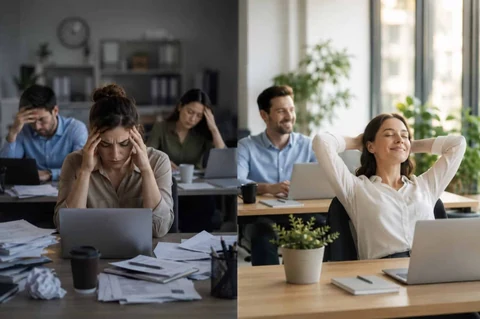
Stress builds up quietly over a working day, and the cost shows up long before anyone calls in sick.
Read the articleTell us your team size and we’ll send a quote within one working day.
Get my quoteRead more: Corporate and office massage. Chair massage at your workplace for teams of five to 200+ employees.